
Tesla wheel cover clips are the small plastic tabs that keep your covers locked to the wheel — and when one breaks, bends, or wears out, the whole cover can rattle, loosen, or fall off mid-drive. The good news: most clip problems take minutes to diagnose and fix. This guide explains how the clips work, the warning signs of failure, and when a quick fix is enough versus when a replacement cover is the smarter move.
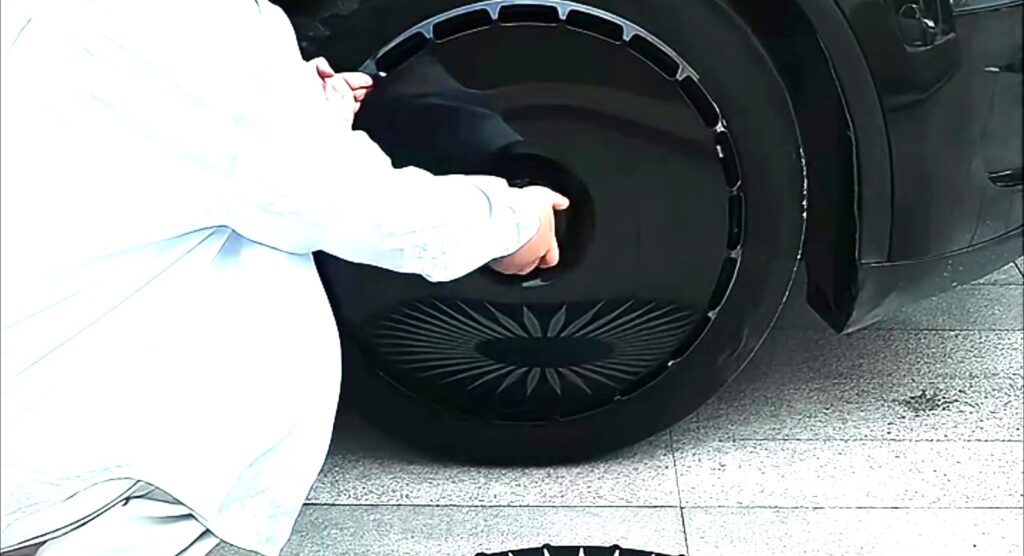
How Tesla Wheel Cover Clips Work
Every Tesla wheel cover uses a ring of flexible clips molded into the back of the cover. As you press the cover onto the wheel, each clip flexes past the rim edge and snaps into a groove. On Model 3 and Model Y, you’ll typically find between six and twelve retention points spaced evenly around the circle.
The system is intentionally tool-free: no screws, no adhesives. That makes installation and removal easy, but it also means the clips carry the full load of vibration, curb bumps, and repeated install cycles. Treat them as wear items, not permanent parts.
Symptoms of Worn or Broken Clips
- Rattling or ticking noise at low speeds, often worse over bumps
- A cover that shifts or lifts at one edge when you press it
- Visible white stress marks or hairline cracks on the clip tabs
- A cover that pops off after a car wash or hard cornering
Any one of these is a signal to check the clips before the cover departs from the wheel entirely. If your covers are already rattling, our guide on Tesla wheel covers making noise covers the audio diagnosis in more detail.
Why Tesla Wheel Cover Clips Break
Three failure modes account for nearly every broken clip. Knowing which one you have tells you whether the cover can be saved.
1. Fatigue From Repeated Installation
Each install-and-remove cycle flexes the clip material. ABS plastic holds up well to dozens of cycles, but after a few seasons of frequent removal — for winter tires, brake work, or cleaning — the tabs lose elasticity and snap. This is the most common cause on daily-driven Teslas.
2. Impact Damage
A hard curb strike or pothole can crack clips instantly, even if the cover looks fine on the surface. Always inspect the back ring after any known impact. A cover that survives one hit with a cracked clip is far more likely to shed clips on the next one.
3. Heat and Cold Cycling
Parking outdoors year-round exposes clips to the full temperature range. Summer heat softens plastic; winter cold makes it brittle. Repeated cycling micro-cracks the material long before you see visible damage — one reason our winter care guide recommends inspecting clips each season.
How to Inspect Your Clips in 5 Minutes
- Remove the cover using the standard pull technique (see our aero cover removal guide if it’s stubborn).
- Run a finger around the back ring and feel for tabs that sit lower than their neighbors or move independently.
- Bend each suspect clip gently. A healthy clip springs back; a failing one stays bent or makes a faint crackle.
- Check the mating groove on the wheel rim for debris — packed dirt often mimics broken-clip symptoms.
Fix or Replace? Making the Right Call
For OEM aero covers, minor issues are often fixable. Clean the clip ring with soap and water, and if a tab is merely deformed, careful warming with a hair dryer followed by gentle reshaping can restore tension. Some owners add small adhesive foam pads behind the ring to take up slack — a legitimate temporary fix.
But there’s a clear line: if two or more clips are cracked, replacement is the only safe answer. A cover held on by half its clips will fail at highway speed, and a lost cover is a $100+ hazard on the road behind you. Given that quality aftermarket sets cost less than most repair bills, replacement usually wins the math — our breakdown of Tesla wheel cover replacement walks through single-cover versus full-set options.
When shopping for a new set, look closely at clip design. Covers with more retention points and thicker tabs — like the sets in the Nauticrim shop — hold up noticeably better over years of installs.
How to Prevent Clip Damage Going Forward
- Align before you press. Forcing a misaligned cover is the #1 killer of clips. Line up all tabs with the groove first.
- Press at the edges, not the center. Push near each clip location until you hear the click.
- Limit removal cycles. If you swap covers seasonally, handle the clips gently and inspect each time.
- Wash by hand when possible. High-pressure washers aimed at the rim edge can lever clips loose over time.
FAQ: Tesla Wheel Cover Clips
Can you buy replacement clips separately?
Rarely. Most covers have clips molded as part of the body, so a broken clip means a new cover. A few aftermarket brands sell clip repair kits, but fitment varies — verify compatibility with your exact cover model first.
Is it safe to drive with a broken clip?
Short distances at low speed, usually yes. But the cover will progressively loosen, and a cover that detaches at highway speed becomes a road hazard. Inspect and replace before your next long drive.
Do aftermarket covers use better clips?
Quality varies widely. Premium aftermarket covers typically use more retention points and reinforced ABS, while budget sets sometimes reuse fragile OEM-style tabs. Check product photos of the back ring before buying.
Keep Your Covers Locked On
Tesla wheel cover clips are simple parts, but they decide whether your covers stay put for years or vanish on the freeway. Inspect the clip ring twice a year, install with care, and replace any cover running on half its retention points. Ready for a set built to stay put? Browse the full Nauticrim wheel cover collection and find a perfect-fit set for your Model 3 or Model Y today.