
Glossy black wheel covers are one of the cheapest ways to sharpen a Model 3 or Model Y — until they turn chalky grey after a summer of brake dust and sunlight. If you have been searching how to make Tesla wheel covers shiny again, the answer is usually not a new set. It is a 30-minute polish and seal routine, done in the right order, with products that will not attack the plastic.
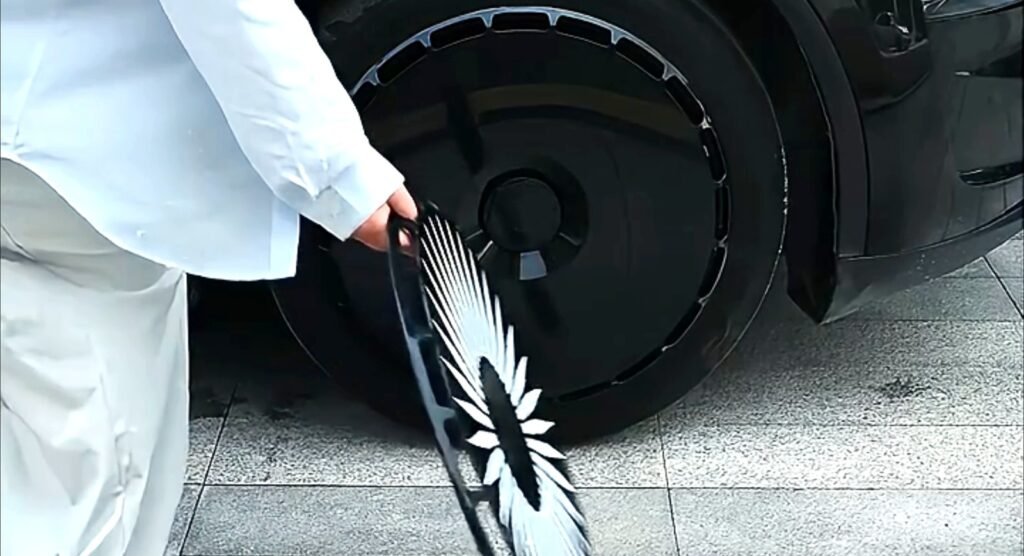
Why Do Tesla Wheel Covers Lose Their Shine?
Wheel covers are not painted steel. Most are molded ABS or polypropylene with a thin clear coat or a painted top layer, and that top layer is only a few microns thick. Once it oxidizes, the surface scatters light instead of reflecting it, and the cover reads as dull grey even when it is clean.
Four things speed that up:
- UV exposure. Daily sun breaks down the clear coat and turns black plastic slightly brown or chalky.
- Brake dust. Iron particles embed in the finish, then rust in place and leave a rough, matte texture.
- Harsh chemistry. Acid-based wheel cleaners etch the surface in seconds and are almost impossible to undo by hand.
- Brush car washes. Spinning bristles leave thousands of fine swirls that scatter light in every direction.
Heat matters too. Covers sit a few inches from the brake rotor, so a finish that would last years on a door panel gets baked and cooled every single drive.
How to Make Tesla Wheel Covers Shiny Again in 4 Steps
Work on one wheel at a time, out of direct sun, with the cover still fitted. You do not need to remove it unless the inner edge is caked with dust.
Step 1: Wash and Dry Properly
Rinse the cover, then wash it with a pH-neutral car shampoo and a soft microfiber mitt or wheel woolie. Skip the stiff brush. Rinse from the top down and dry with a clean microfiber towel so no water spots bake onto the finish.
Step 2: Remove the Embedded Contamination
Spray an iron remover on the damp cover and let it dwell for three to five minutes. It turns purple as it dissolves brake dust. Rinse thoroughly. If the surface still feels gritty through a plastic bag, follow with a light clay bar and plenty of lubricant.
Step 3: Polish Out the Oxidation
Apply a fine plastic polish or a finishing compound to a foam applicator and work it into the cover in small circles, using moderate pressure. Do not let it dry hard. Buff the residue off with a clean microfiber, then wipe the surface with isopropyl alcohol so the sealant can bond.
Step 4: Seal the Finish
Apply a thin coat of UV-stable ceramic spray sealant or a synthetic paint sealant. One even layer is enough — more does not last longer. Let it cure for at least an hour, and keep the car out of the rain for 24 hours.
That sequence is the whole answer to how to make Tesla wheel covers shiny again. Polish restores the reflection; the sealant is what keeps brake dust from bonding again next month.
What to Use and What to Avoid
The products matter as much as the technique. These are safe on factory and aftermarket covers:
- pH-neutral car shampoo and two buckets
- Iron remover and a soft detailing brush for the spoke gaps
- Fine plastic polish or finishing compound, applied by hand
- UV-stable sealant, ceramic spray, or a quality synthetic wax
And these are the ones that ruin finishes:
- Acid or “colour-changing” wheel cleaners on a regular basis
- Scouring pads, wire brushes, and stiff tire brushes
- Acetone, brake cleaner, and cellulose thinners
- Dish soap every wash — it strips the sealant layer in a few weeks
Gloss, Matte and Painted Covers Need Different Care
Not every cover should be polished. Check the finish before you start:
- Gloss black or gloss silver: polish, then seal. This is the finish that responds best.
- Matte or satin: clean only, using a matte-specific product. Polishing leaves shiny patches that cannot be blended out.
- Painted or patterned: treat it like body paint — light polish, then wax or sealant. Custom sets such as our DIY custom wheel covers hold gloss well when sealed twice a year.
- Textured or raw plastic: a trim restorer revives the colour, but it will never be glossy.
When Polishing Will Not Fix It
Be realistic about what a hand polish can do. It removes oxidation and light swirls, not damage.
Replace the cover instead of polishing it if the clear coat is peeling in sheets, if a scratch catches your fingernail and shows white or grey underneath, if the plastic has cracked around a clip, or if the yellowing is uniform through the whole thickness. Deep damage like that is covered in our guide to Tesla wheel cover scratch repair — and sometimes the honest answer is a fresh set.
One more check: if the covers are only dirty rather than oxidized, a proper wash is all you need. Our cleaning guide covers the safe wash routine in detail.
Keep the Shine Between Details
Once the finish is restored, maintenance is quick:
- Rinse the wheels weekly and dry them — brake dust left damp is what etches.
- Use a spray sealant or ceramic detailer every third wash.
- Polish once or twice a year, not every month. Each polish removes a little clear coat.
- Park away from sprinklers and avoid brush washes if you care about swirls.
FAQ
Can I use car wax on Tesla wheel covers?
Yes, on gloss and painted covers. Wax gives a warm shine but breaks down quickly near hot brakes. A ceramic or UV-stable sealant lasts considerably longer and is the better choice for wheels.
How often should I polish Tesla wheel covers?
Once or twice a year is enough for most cars. Polishing monthly thins the clear coat and speeds up the fading you are trying to fix.
Will polishing remove scratches from Tesla wheel covers?
Light swirl marks and haze, yes. Scratches you can feel with a fingernail go through the colour layer, and no hand polish will hide them permanently.
Ready for a Finish That Holds Its Gloss?
A cover that starts with a better clear coat needs less polishing later. Browse the full range of gloss, matte and patterned sets in our shop — every set is designed for a factory-fit look on Model 3, Model Y and Model YL, with the UV-stable finish that survives real brake heat. Pick your style, fit it in minutes, and spend your weekends driving instead of polishing.