
Maybe you just pulled your aero covers off for a deep clean, or you love the exposed alloy look and are tempted to leave them off for good. So, can you drive a Tesla without wheel covers? The short answer: yes, your Tesla runs perfectly fine on bare wheels. The smarter question is what you give up when you do — and whether it is worth it day to day.
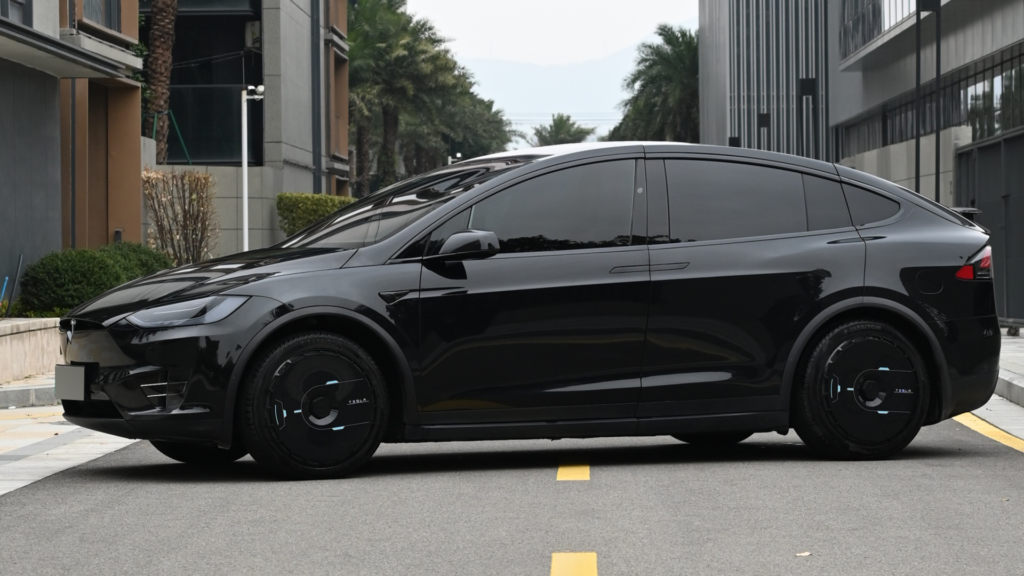
In this guide, we break down exactly what happens when you drive a Tesla without wheel covers: the range impact, the risk to your rims, the legal side, and the moments when going cover-free actually makes sense. By the end, you will know whether to reinstall, replace, or upgrade your set.
Is It Safe to Drive a Tesla Without Wheel Covers?
Safety comes first, so here is the reassuring part: Tesla wheel covers are cosmetic accessories, not structural components. They clip over the alloy wheel and hide it from view — they do not hold the tire, affect braking, or carry any load. With or without them, your brakes, suspension, and tires work exactly the same.
That said, safe does not mean consequence-free. Driving a Tesla without wheel covers changes three things: how far you go on a charge, how exposed your rims are to damage, and how the car looks. Let us take each in turn.
The Range Question: Do Bare Wheels Cost You Miles?
Aero wheel covers exist for a reason. They smooth airflow around the wheel wells, one of the biggest sources of drag on any car. Remove them and the exposed spokes and brake components stir the air instead, increasing drag slightly.
How much range do you actually lose? Most owners see a low single-digit percentage difference, mostly on highway drives. Around town at lower speeds, the gap shrinks to near zero. If you want the full physics and real-world numbers, we covered them in detail in our guide on whether Tesla wheel covers affect range.
- Highway driving: the biggest visible difference — expect a few percent less range with bare wheels.
- City driving: the impact is minimal and hard to notice.
- Cold weather: the gap widens slightly, since colder air is denser and drag rises.
Rim Protection: What Your Bare Wheels Are Exposed To
This is the part most owners underestimate. Wheel covers act as a sacrificial barrier between the road and your alloys. Take them off and every parking job, every pothole-adjacent curb, and every winter of road salt hits bare metal.
Curb rash is the obvious risk — one careless parallel park can leave an ugly gouge that costs more to repair than a full set of covers. But there is more:
- Brake dust buildup etches into unprotected alloy finishes over time.
- Road salt and grime speed up corrosion, especially in winter states.
- UV and heat slowly dull clear-coated wheels left fully exposed.
Our guide to Tesla wheel covers and curb protection explains the sacrificial-barrier idea in depth — it is the strongest argument for keeping covers on daily.
When Driving Without Wheel Covers Makes Sense
None of this means the bare-wheel look is wrong. There are perfectly good moments to run without covers:
- Car meets and photos — showing off premium aftermarket wheels or big brake upgrades.
- Deep cleaning days — detailing the rims properly with the covers off.
- Mid-refit — while painting, wrapping, or swapping to a new cover set.
- Custom wheels — if you upgraded to wheels that do not accept covers at all.
If any of these describe you, enjoy the exposed-alloy look. Just know the trade-offs and reinstall before your next road trip.
How to Remove and Store Covers the Right Way
If you plan to go cover-free temporarily, remove them properly rather than prying blindly. Our walkthrough on how to remove Tesla aero wheel covers covers the tools and technique, but storage matters just as much:
- Store covers flat in a cool, dry place — never leaning where they can warp.
- Keep them away from direct sunlight and heat sources.
- Stack with a soft cloth between each cover to protect the finish.
When you are ready to put them back, our installation guide walks you through aligning the valve stem notch and seating each clip until it clicks.
Reinstall, Replace, or Upgrade Your Covers?
If your original covers came off because they rattled, sat loose, or lost a clip, do not just pop them back and hope for the best. Worn clips are the main reason covers loosen over time — and a cover that lets go at highway speed is a road hazard. If yours look tired, replacing the set costs less than one alloy wheel repair.
Ready to refresh your wheels? Browse the full collection of Tesla wheel covers at Nauticrim — from OEM-style aero covers to bold custom designs, all built for a secure clip-on fit on Model 3 and Model Y.
Frequently Asked Questions
Do you lose range driving a Tesla without wheel covers?
Usually a small amount. Expect a low single-digit percentage drop, mostly visible on sustained highway driving. City driving shows almost no measurable difference.
Is it illegal to drive a Tesla without wheel covers?
In virtually all regions, no — wheel covers are cosmetic. Check your local vehicle code only if your bare wheels expose sharp damage like a cracked rim edge, which can fail inspection.
Will driving without wheel covers damage my wheels?
Not immediately and not directly. But bare alloys face a higher long-term risk of curb rash, brake-dust etching, and corrosion — all of which cost more to fix than a set of covers.
The bottom line: you can absolutely drive a Tesla without wheel covers, and for a detailing day or a car show it is a fair trade. For daily driving, the range penalty is small but real, and your rims lose their best line of defense. If your covers are worn or you simply want a new look, shop the Nauticrim collection and clip on a set that protects as good as it looks.