
If your Tesla wheel covers have gone from deep gloss to a dusty, water-spotted gray, ceramic coating Tesla wheel covers is one of the few upgrades that costs very little and changes how the car looks every single day. Unlike wax, a ceramic layer bonds to the plastic or aluminum surface and gives it a slick, hydrophobic skin that brake dust and road grime struggle to grip.
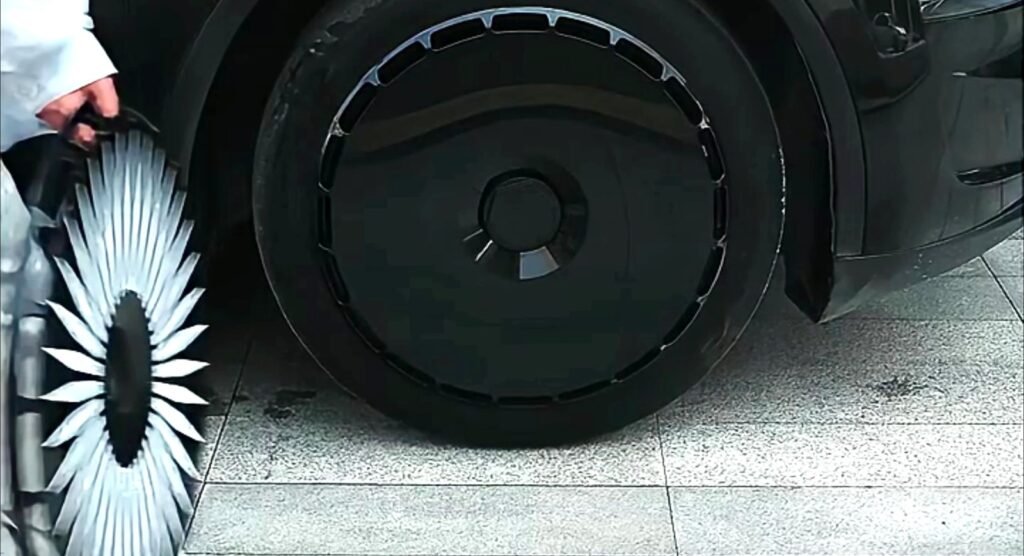
This guide explains what a coating really does on wheel covers, how to apply it without streaks, how long it lasts in real driving, and when it is simply not worth the money.
What a Ceramic Coating Actually Does on Wheel Covers
A ceramic coating is a liquid SiO2-based product that cures into a thin, hard, glass-like film. On paint it adds gloss and chemical resistance. On Tesla wheel covers it does three practical things.
- It fills the micro-texture. ABS covers have a slightly porous surface that traps dust. The coating smooths it so contamination sits on top instead of inside.
- It makes the surface hydrophobic. Water beads and rolls off, taking loose dirt with it. That means fewer drying spots after rain.
- It resists brake dust bonding. Tesla brakes shed a lot of iron dust, especially with regenerative braking doing most of the stopping. A coated cover wipes clean instead of needing an iron remover every month.
What it does not do is make the cover scratch-proof. A coated cover can still pick up curb rash, and a coating will not hide existing damage. Prep work decides the final result.
Why Ceramic Coating Tesla Wheel Covers Is Worth Considering
Wheel covers sit in the worst environment on the car: heat from the brakes, UV from the sun, salt in winter, and constant spray from the road. That is exactly where an unprotected plastic surface degrades fastest.
Owners who coat their covers usually notice two changes within a month. Washes get shorter, because dust rinses off instead of needing a brush in every fin. And the finish stays glossier for longer, which matters on black and gunmetal designs where fading is obvious.
It is also one of the cheapest cosmetic jobs you can do yourself. A small bottle of consumer coating is enough for a full set of four covers, and the whole process takes about an hour plus curing time.
What You Need Before You Start
Gather everything first so the coating does not start curing while you hunt for a towel.
- A pH-neutral car shampoo and two buckets, or a dedicated wheel cleaner
- An iron fallout remover for brake dust
- Isopropyl alcohol (IPA) or a panel-prep spray
- Two microfiber applicator pads and three plush microfiber towels
- A consumer-grade ceramic coating rated for plastic and wheels
- Nitrile gloves and a well-ventilated, shaded work area
Work out of direct sun. Coatings flash too fast on a hot cover, and once they streak, the only fix is polishing the layer off and starting again.
How to Apply Ceramic Coating to Tesla Wheel Covers
Step 1: Remove the covers from the car
Coating a cover while it is still clipped to the wheel is a shortcut that always shows. Take each cover off so you can reach the outer lip and the back edge. If removal is new to you, our guide on how often to remove Tesla wheel covers covers the safe pull points.
Step 2: Clean, decontaminate, and dry
Wash with shampoo, then spray iron remover and let it turn purple before rinsing. Dry completely with a microfiber towel and let the covers sit for ten minutes. Any moisture trapped under the coating turns into a clouded patch.
Step 3: Wipe down with IPA
This is the step most people skip. Shampoo leaves a gloss enhancer behind, and the coating will bond to that film instead of the plastic. Wipe every surface with IPA until the towel glides without drag.
Step 4: Apply in small sections
Wrap a suede cloth around the applicator, add three to four drops of coating, and work one quadrant at a time in overlapping passes. Wait for the coating to flash to a faint rainbow haze, then buff with a clean plush towel. Move to the next quadrant.
Step 5: Cure and reinstall
Keep the covers dry for 24 hours and away from rain for a week if you can. Reinstall gently so you do not push grit between the cover and the rim.
How Long Does It Last on Wheel Covers?
A quality consumer coating on wheel covers typically holds up for six to twelve months. That is shorter than on paint because wheels see heat cycles, brake dust, and strong cleaners.
Winter salt shortens it further. If you drive through road salt, expect to reapply before the season ends, and use a pH-neutral shampoo rather than an aggressive acidic wheel cleaner that eats the layer.
Maintenance is simple: wash with the same shampoo you use on the body, dry with a towel, and top up with a spray sealant every few weeks. If water stops beading, the coating is spent and it is time for another thin layer.
Ceramic Coating vs Wax vs PPF on Tesla Wheel Covers
- Wax: cheapest and easiest, but lasts weeks not months, and melts off in summer brake heat.
- Ceramic coating: best balance of gloss, dust shedding, and durability for the money.
- Paint protection film: excellent against stone chips and curb scuffs, but on curved finned covers it is expensive to install and hard to wrap cleanly.
For most owners, coating is the practical choice. If curb damage is your main worry, pair the coating with a set of covers designed to take impact, like the Power Turbine wheel cover for Tesla, which sits proud of the rim lip.
Mistakes That Ruin a Wheel Cover Coating
- Applying in direct sun or on a warm cover, which causes streaks and high spots.
- Skipping the IPA wipe, so the coating fails within weeks.
- Using too much product. More coating is not more protection, it is a messier buff.
- Coating over scratches and hoping they disappear. Fix the surface first with our Tesla wheel cover scratch repair guide.
- Washing with a harsh degreaser a week later and stripping the fresh layer.
Frequently Asked Questions
Can you ceramic coat plastic Tesla wheel covers?
Yes. Use a coating labelled for plastic, trim, or wheels. Coatings designed only for clear-coated paint can haze on bare ABS plastic.
Does ceramic coating stop Tesla wheel covers from fading?
It slows UV fade and oxidation significantly, because the film blocks direct contact between sunlight and the plastic. It will not reverse fading that has already happened, and glossy black covers still benefit from parking in shade.
Is ceramic coating better than just polishing the covers?
They solve different problems. Polishing restores gloss on an oxidized surface; coating protects that gloss afterward. If your covers look chalky, polish first, then coat. Our guide on how to make Tesla wheel covers shiny again covers that step.
The Bottom Line
Ceramic coating Tesla wheel covers is a low-cost, weekend-friendly job that keeps a set looking new through brake dust, rain, and winter salt. Prep properly, apply thin, and top it up twice a year, and the covers will stay glossy far longer than an untreated set.
Ready to start with a set that already looks sharp? Browse the full range of Tesla wheel covers in the Nauticrim shop and pick a finish worth protecting.