
If you live somewhere rainy, humid, or snowy, you have probably wondered: do Tesla wheel covers trap moisture against your wheels? It is a fair concern. Trapped water and condensation can dull a finish, stain the alloy, and in the worst cases start surface corrosion. The short answer: any well-seated cover can hold moisture temporarily, but with the right materials and a few simple habits, the risk is easy to manage.
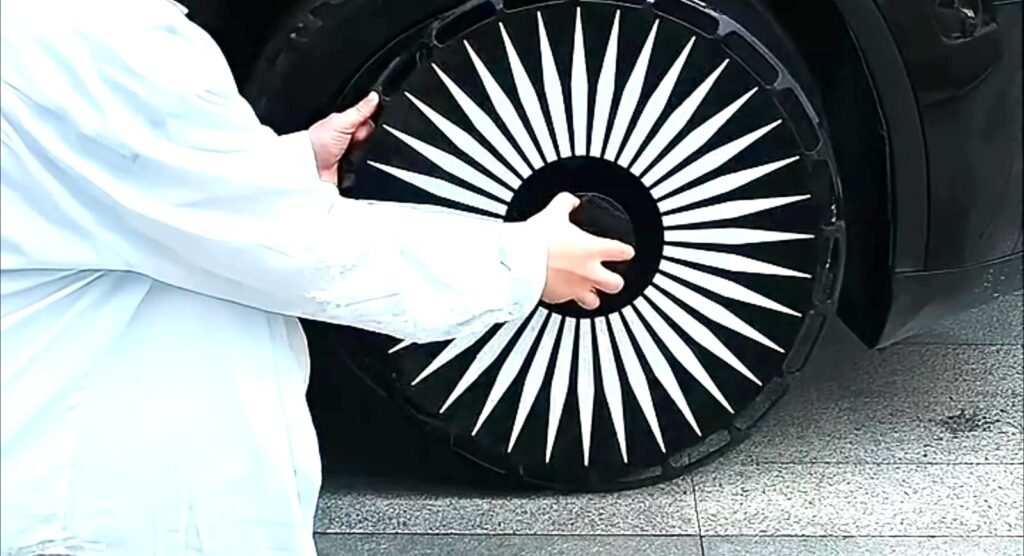
In this guide, we explain when moisture becomes a real problem, which cover designs drain and dry best, and the maintenance routine that keeps both the cover and the wheel underneath in great shape. By the end, you will know exactly what to check after a wet week — and where to find covers that are built for all-weather use.
Do Tesla Wheel Covers Trap Moisture in Real-World Conditions?
A Tesla wheel cover sits a few millimeters off the wheel face, and that gap is where water goes. Rain, melting snow, and morning condensation can all work their way behind a cover, especially after a car wash or a night parked outside. This is normal — and by itself, it is not damaging.
Moisture only becomes harmful when it is held against the surface for days or weeks without a chance to dry. Continuous dampness is what leads to water spotting, finish hazing, and eventually oxidation on unprotected alloy. A cover that is driven regularly lets airflow dry that gap quickly, which is why daily drivers rarely see moisture damage while a garaged weekend car with dirty wheels sometimes does.
Why Aluminum Alloy Wheels Are More Sensitive Than You Think
Modern Tesla wheels are clear-coated aluminum, and that coating is the real defense line. Under it, the metal resists corrosion well; on top of it, standing water with road salt or brake dust slowly breaks the coating down.
- Road salt is the biggest accelerant — damp winters plus trapped salt water equals aggressive pitting over time.
- Brake dust is mildly corrosive when wet, and it collects heavily right at the cover’s edge where airflow is weakest.
- Clogged weep areas: some OEM aero covers rely on small gaps at the bottom to drain — block them with grime and water pools.
None of this happens overnight. Owners who wash monthly and dry their wheels rarely experience any of it, even in wet climates.
Cover Designs That Drain and Dry Better
Not all wheel covers handle wet weather equally. When choosing a set, look for these features:
- Full-coverage ABS with UV stabilization — sealed, non-porous, and it will not absorb water the way cheap painted covers can.
- Open bottom edge or drainage gap — lets water escape instead of pooling at the lowest point.
- Clip-on mounting over bolt-on — quality clips leave a slight breathing gap and make removal easy for periodic drying and cleaning.
- Matte or textured finishes — they hide the water spotting that glossy finishes show first.
OEM-style aero covers are generally fine in rain; their risk factor is salt, not water itself. If you are unsure how your current set behaves, the Tesla wheel cover material comparison breaks down how ABS, aluminum, and carbon fiber each cope with wet conditions.
A 10-Minute Routine to Prevent Trapped Moisture Damage
You do not need to remove covers after every drive. This simple routine covers the whole year:
- Every wash (every 2–4 weeks): rinse behind the cover edge with a hose or pressure washer at a safe distance, then dry the visible seam with a microfiber towel.
- Monthly in wet seasons: pop one or two covers off, inspect the wheel face for spotting or staining, wipe it dry, and reinstall.
- After winter or a coastal trip: remove all covers, wash the wheels with pH-neutral soap, dry fully, then reinstall on clean, dry wheels.
- Before long storage: always remove covers and store them dry — parking on damp tires with wet covers for months is the classic damage scenario.
That is genuinely all it takes. The routine mirrors the steps in our guide to cleaning Tesla wheel covers, so you can fold both jobs into one session.
Warning Signs: When Moisture Has Already Done Damage
Catch problems early and they are trivial to fix. When you remove a cover, check for:
- White chalky streaks or cloudy patches on the alloy — early clear-coat oxidation.
- Dark staining or rust-colored rings around lug holes — trapped contaminant, clean promptly.
- Bubbling or peeling clear coat — needs professional refinishing, the sooner the better.
- Mildew smell or green film on the cover’s inner face — the cover needs a soap wash and full air-dry before reinstalling.
If damage is already past the surface stage, replacement is usually cheaper than refinishing. Our wheel cover replacement guide explains when to repair and when to swap.
FAQ: Tesla Wheel Covers and Moisture
Should I remove my wheel covers after every rainstorm?
No. Regular driving dries the gap naturally, and rainwater itself is nearly pure. Only intervene if the car sits parked for weeks in damp conditions, or if you drive on salted roads and cannot wash soon.
Can trapped moisture cause my tire pressure sensor to fail?
Not typically. TPMS sensors are sealed electronics rated for wheel-well conditions. Persistent standing water can corrode a valve stem over years, but normal cover use with basic cleaning will not harm it.
Are aftermarket wheel covers worse for trapping water than OEM?
Not if they fit correctly. A well-designed aftermarket set with a drainage gap and quality clips performs just like OEM. Very thick, rigid bolt-on covers with no breathing gap are the ones to avoid in wet climates.
Keep your wheels dry underneath and stylish on top. Browse the full Nauticrim collection of weather-ready Tesla wheel covers for Model 3 and Model Y — free shipping, model-specific fitment, and finishes built to handle whatever the forecast brings.