
Scroll through any auto parts listing and you will see the word universal attached to half the wheel covers on the market. It sounds convenient — one set that fits everything — but does that promise hold up for Tesla owners? The short answer is no: Tesla wheel covers are not universal. Fitment depends on wheel diameter, clip design, and even the model year of your car. The good news is that finding the right fit takes about two minutes once you know what to check. In this guide we break down which covers can swap between Tesla models, what “universal” really means in practice, and how to order the correct set the first time.
What “Universal” Actually Means for Tesla Wheel Covers
True universal hubcaps are designed for old-school steel wheels in small diameters — typically 14 to 17 inches — and they grip the rim with a spring-steel clip ring. Teslas wear large, uniquely contoured alloy wheels (18 to 22 inches) with aerodynamic covers that clip onto factory-specific mounting points. So, are Tesla wheel covers universal in any real sense? No. A generic hubcap from a parts store will neither fit the diameter nor latch onto a Tesla wheel correctly.
When a listing for Tesla wheel covers claims “universal,” it usually means one of two things: the cover stretches over the wheel loosely, or the seller expects you to adapt it yourself. Either path tends to end with rattles, gap misalignment, or a cover that departs the vehicle mid-drive. A proper cover is engineered per wheel.
Do Model 3 and Model Y Share the Same Wheel Cover Fitment?
This is the most common swap question, and the answer is no. The Model 3 rides on 18-inch wheels (the factory aero covers fit the 18×8.5 Photon-style rim), while the Model Y uses larger 19-inch Gemini wheels. A 19-inch cover cannot seat on an 18-inch wheel, and the clip positions are laid out differently as well.
Beyond diameter, Tesla revised wheel designs across model years, which changes the tab locations on the cover. A cover pulled from a 2021 Model Y may not snap cleanly onto a 2025 Model Y’s wheel. Always match the cover to the model, wheel size, and — ideally — the year range the seller specifies. Our Model Y wheel covers fitment guide walks through the exact sizes in detail.
What About Model S, Model X, and Cybertruck?
The larger models move even further from any shared standard. The Model S and Model X use a 5×120 bolt pattern, while the Model 3 and Model Y share 5×114.3 — so even the underlying wheels differ, not just the plastic. Factory aero covers for the Model S (19 or 21 inches), the Model X (20 inches), and the Cybertruck (a unique 20-inch design) are each model-specific.
If you own one of these vehicles, treat “universal” claims with extra suspicion. Almost every quality aftermarket option for the S, X, or Cybertruck is sold explicitly for that vehicle. We cover each in our Model X fitment guide and Cybertruck buying overview.
Are Aftermarket Tesla Wheel Covers More Universal Than OEM?
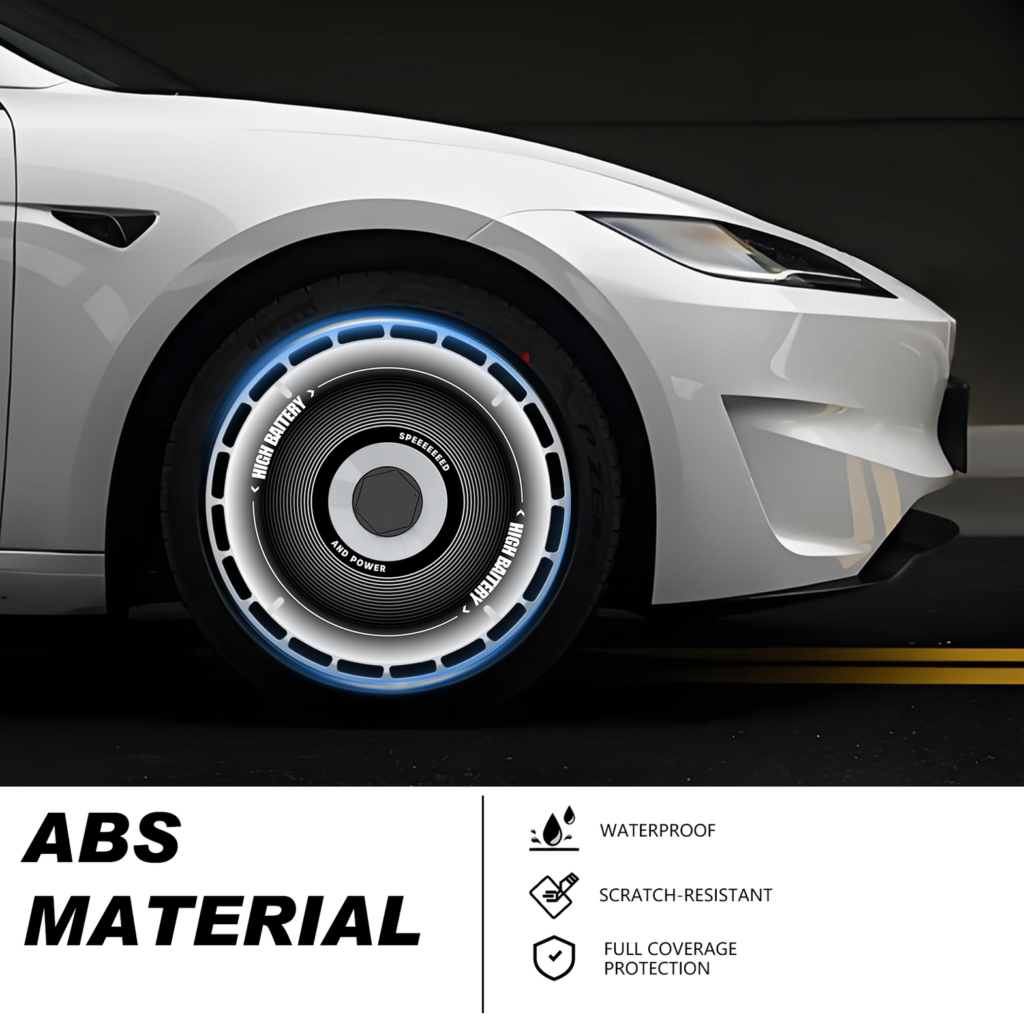
Aftermarket covers get closer to flexibility, but they are still not one-size-fits-all. A well-engineered set — like the ones we make at Nauticrim — is molded per platform: Model 3 sets are cut for 18-inch wheels and Model Y sets for 19-inch wheels, with clips that mimic the factory retention so the cover sits flush and stays put. What aftermarket does add is style choice, since you can pick colors and patterns the factory never offered.
Beware of listings for universal Tesla wheel covers that ship as one SKU “for all models.” Those are usually generic covers with a T logo glued on. The tell-tale signs are no wheel-size selection at checkout and no mention of clip design. Real fitment-specific listings always ask for your model and wheel diameter.
How to Check Fitment Before You Order
- Confirm your wheel diameter. Read it off the tire sidewall (the number after the letter R, e.g. 235/45R18) or the sticker inside the driver’s door jamb.
- Match model and year range. A cover made for a 2022 Model 3 may not fit a 2026 refresh. Reputable sellers list compatible years.
- Check the mounting style. Factory-style covers clip onto the wheel face; center-lock aftermarket designs thread through the hub. Both work, but they are not interchangeable.
- Buy from fitment-specific listings. If a product page never asks what you drive, assume it does not fit.
- When in doubt, ask. Send the seller your model, year, and wheel size before ordering — it takes one message and prevents a return.
Frequently Asked Questions
Can I put Model Y wheel covers on a Model 3?
No. The Model Y’s 19-inch wheels are a full inch larger than the Model 3’s 18-inch wheels, and the clip layout differs. The cover will not seat, and forcing it risks cracked tabs and paint damage. Buy the set made for your specific model and size.
Will a universal hubcap from an auto parts store fit a Tesla?
Almost certainly not. Universal hubcaps are built for 14-17 inch steel wheels with a spring clip ring. Tesla wheels are 18-22 inches with factory-specific mounting geometry, so a generic hubcap will rattle, sit misaligned, or simply fall off. Stick with covers engineered for your exact wheel.
Do aftermarket covers mount over the factory aero wheels?
Yes. Quality aftermarket covers are designed to fit directly over your stock alloy wheels using the same clip points as the OEM aero covers — no drilling, no adapters. Installation takes about 15 minutes for all four wheels and is fully reversible, which matters if you lease your Tesla.
Find the Right Set for Your Exact Model
Universal is a marketing word — fitment is what keeps covers on your car. Every set in the Nauticrim shop is built per Tesla model and wheel size, with factory-style clips, and designs you cannot get from the factory. Not sure which size you need? Check the fitment guides above or message us with your model and year, and we will point you to the exact set. Your wheels — and your curb rash record — will thank you.