
Ordering a set of wheel covers only to find they do not seat properly is one of the most frustrating Tesla ownership mistakes — and almost every case traces back to one thing: the wrong size. Understanding tesla wheel cover sizes takes about two minutes, and it saves you the hassle of a return. This guide shows you how to read your wheel size, which diameters each Tesla model uses, and how to match a cover set to your exact setup.
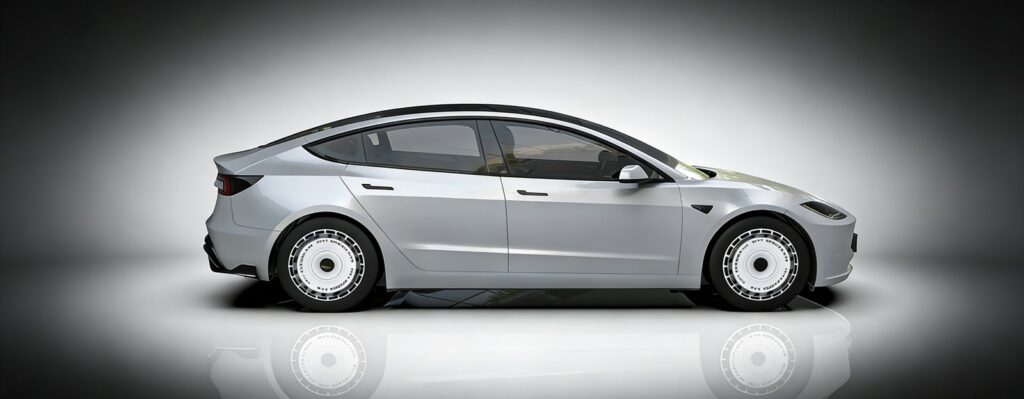
Why Wheel Cover Size Matters
Wheel covers are not stretch-to-fit accessories. A cover built for an 18-inch wheel is molded to grip the rim lip and clip points of an 18-inch wheel — no more, no less. Put an 18-inch cover on a 19-inch wheel and it simply will not reach the seating position; put a 19-inch cover on an 18-inch wheel and the clips cannot close. Even a near-miss fit causes problems: loose clips rattle at highway speed, and a cover that is not fully seated can work itself off over bumps.
The right size also matters for looks and aerodynamics. A correctly sized cover sits flush with the tire sidewall, keeps the smooth aero face Tesla designed the car around, and protects the entire rim face from curb rash. A wrong-size cover sits proud, gaps at the edges, and spoils both the silhouette and the drag advantage.
How to Find Your Tesla Wheel Size in 30 Seconds
You do not need to remove a wheel or measure anything with a tape. Your tire sidewall already tells you. Look at the code printed on the tire — it reads something like 235/45R18. The first number is the tire width in millimeters, the second is the sidewall aspect ratio, and the last number is your wheel diameter in inches. That final digit is the one that decides which covers you need.
Two backups, in case the sidewall is worn or you are checking for someone else’s car:
- Door jamb sticker: open the driver’s door and check the tire-pressure label — it lists the factory wheel size along with recommended pressures.
- Owner’s manual or order sheet: the factory wheel specification for your trim is printed in both.
One warning: do not assume by eye. An 18- and a 19-inch wheel can look nearly identical through the tire sidewall, because Tesla uses different tire profiles to keep the overall diameter similar.
Tesla Wheel Cover Sizes by Model
Here is the quick reference for the current lineup. Trim levels change over the years, so treat this as a starting point and confirm with your sidewall before ordering.
- Model 3: most trims ride on 18-inch wheels; earlier Performance versions use 20-inch, and some older trims were offered on 19-inch. The refreshed Highland keeps the 18-inch fitment (Photon wheels).
- Model Y: standard trims use 19-inch wheels (Gemini); higher trims add 20-inch options (Induction), and Performance versions have run larger. The 2025 Juniper refresh continues with 19- and 20-inch fitments.
- Model S: 19-inch standard, with 21-inch wheels on higher-performance trims.
- Model X: 20-inch standard, with 22-inch options on some trims.
For the two most common cars we hear about: a standard Model 3 almost always needs 18-inch covers, while a standard Model Y almost always needs 19-inch covers. Performance trims are the usual exception.
Are 18, 19 and 20-Inch Covers Interchangeable?
No — and this is worth stating plainly. The cover’s mounting geometry is sized to the wheel diameter: the clip ring, the rim-lip channel, and the center bore alignment all change with each inch of diameter. A one-inch mismatch is far beyond any tolerance the clips can absorb. There is no adapter, no “universal stretch” trick, and no safe way to force it.
What does carry across is the design language. A quality set like the DIY Custom Wheel Cover is produced in multiple diameters with the same styling, so a two-car household can run a matching look even when the cars take different sizes. If you are wondering whether covers swap between different Tesla models entirely, see our cross-model fitment guide.
Common Size Mistakes to Avoid
Most returns we see come from four avoidable errors:
- Buying by model name alone. “Model 3” is not a size — the same car has shipped with more than one wheel diameter depending on trim and year.
- Copying a friend’s setup. If their car has the Performance wheels and yours does not, their “perfect fit” will not fit you.
- Ignoring the refresh generations. Both the Model 3 Highland and the Model Y Juniper kept their standard diameters, but styling changed — worth a quick check against our Highland fitment guide or Model Y fitment guide before ordering.
- Guessing after an upgrade. If the car has aftermarket wheels, forget the factory chart entirely — go by the sidewall code on the tires actually mounted.
Catch these and you are 99% of the way to a correct order. The rest is styling preference — and if you want a second opinion on the rest of the purchase, our buying mistakes checklist covers materials, clips, and seller red flags.
What If You Get It Wrong Anyway?
A wrong-size cover usually announces itself immediately: it will not clip in, or it sits visibly off the rim face. Do not drive on it. A partially seated cover can loosen at speed — the same failure mode behind noisy or missing covers, which we cover in our guides to rattle diagnosis and covers falling off. Repack the set, confirm the sidewall code, and exchange for the correct diameter. Reputable sellers handle size exchanges without drama, which is one more reason to buy from a Tesla-specific shop rather than a generic marketplace listing.
Frequently Asked Questions
How do I know what size Tesla wheel covers I need?
Read the last number of the tire sidewall code. A tire marked 235/45R18 takes 18-inch covers; 255/45R19 takes 19-inch covers. The door jamb sticker lists the same factory size if the tire markings are unclear.
Are 18-inch and 19-inch wheel covers interchangeable?
No. The clip ring and rim-lip geometry are molded to a specific diameter, and a one-inch difference cannot be taken up by the clips. Forcing a mismatched cover risks rattling, damage to the rim finish, or the cover detaching while driving.
Do all Tesla Model 3s use 18-inch covers?
Most do, but not all. Standard and Long Range trims ride on 18-inch wheels, while Performance versions have used larger diameters, and some earlier trims offered 19-inch wheels. Check the sidewall — it takes thirty seconds and removes all doubt.
Order the Right Size the First Time
Once you know your diameter, picking a set is the fun part. Browse the Nauticrim shop, filter by your wheel size, and choose a design that fits flush, installs in minutes, and keeps your rims showroom-clean. Right size, right look, zero returns.