
A Tesla owners’ meet is a strange place to study wheels. The same car shows up five times, and each one wears a completely different face. That is the appeal of the aftermarket: the types of Tesla wheel covers on the market now run from near-original aero discs to aggressive directional turbines, and a single set can change the personality of the car in an afternoon.
Style is not the whole story, though. Cover design affects range, brake cooling, how easily the wheel cleans up, and how well the plastic survives a curb. This guide breaks down the main Tesla wheel cover styles, what each one is actually good at, and how to pick the right set for a Model 3, Model Y, or Model S.
What Are the Main Types of Tesla Wheel Covers?
Most sets sold today fall into four visual families. Once you can name them, shopping stops being a scroll through random photos and becomes a short list of real options.
Aero and closed-face covers
Aero covers are the closest thing to what Tesla ships from the factory. The face is flat or gently domed, with only small openings around the rim, so air slides past instead of tumbling into the wheel well.
They are the quietest option at highway speed and the easiest to wipe clean, because there are no deep pockets for brake dust to collect in. The trade-off is visual: a closed face hides the wheel entirely and reads as practical rather than modified.
Turbine and radial-spoke covers
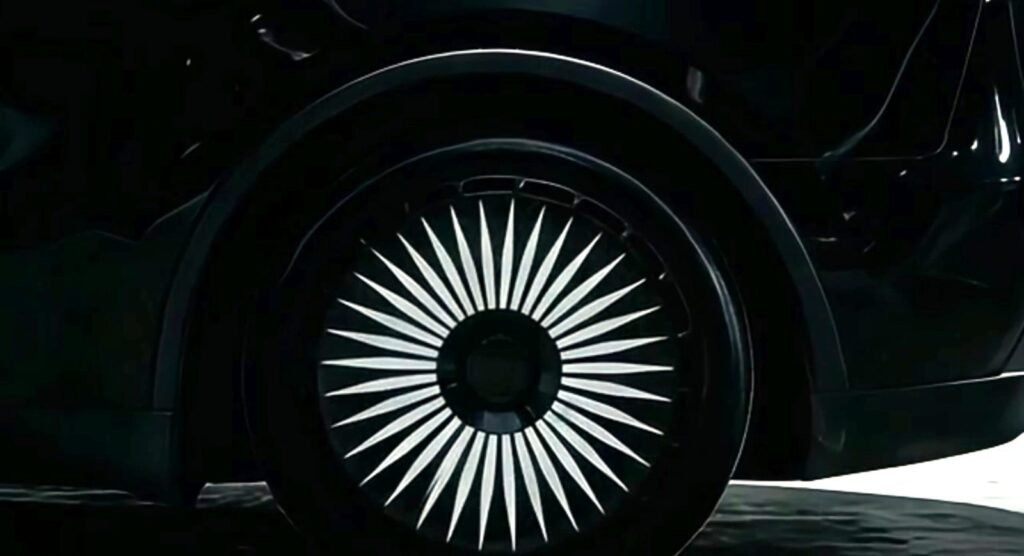
Turbine designs use thin blades radiating from the center hub, like the set in the photo above. They look like they are spinning even when the car is parked, which is why they photograph so well on dark cars.
One detail matters when ordering: many turbine sets are directional, with a left and a right version. Check the listing before you buy, because a mismatched pair will look wrong from one side of the car and cannot be fixed by swapping wheels.
Multi-spoke and mesh styles
These mimic a traditional 10- to 20-spoke alloy wheel. They open up the face and let you see the brake rotor and caliper behind it, which suits Performance models with painted calipers.
The cost is maintenance. More open area means more airflow but also more visible brake dust, and every spoke gap is another place for road film to sit.
Forged-look and split-spoke designs
Chunky split spokes and faux-forged finishes sit at the sporty end of the range. They add visual weight to the corners and pair well with lowered suspension, tinted glass, and dark trim.
Because the shapes are bolder, these covers show curb rash more clearly than fine-spoke designs. On a car parked on a tight city street, that is worth thinking about before you fall for the look.
Finishes: gloss, satin, matte, and two-tone
Finish changes the same design more than most buyers expect. Gloss black gives the deepest, wettest look but shows swirl marks and water spots. Satin and matte hide dust and small scratches far better, which makes them the easier daily-driver choice.
Two-tone sets, usually gloss black with machined silver edges, catch light at night and break up the side profile. They read as more expensive than a single-color cover at the same price.
How Cover Design Affects Range and Brake Cooling
A closed aero face smooths airflow across the wheel opening, and that is where most of the efficiency gain comes from. The difference is real but modest: typically a small single-digit percentage of consumption, and only obvious on steady highway runs.
Open designs give up a little of that advantage in exchange for airflow over the brakes and a look most owners prefer. For normal road driving, neither choice is a problem. If you regularly do hard mountain descents or track sessions, run open covers or take them off for the day.
What matters more than the design is fit. A cover that sits proud of the rim, or one with tired clips, will flutter at speed and cost you far more range than any spoke pattern.
Fitment Comes Before Style
Every design above is built around a specific wheel diameter and clip layout. Model 3 and Model Y covers are not interchangeable, and the refreshed Highland and Juniper wheels use different locating tabs again.
Before you compare finishes, confirm three things:
- Wheel diameter — 18, 19, or 20 inch, printed on the tire sidewall.
- Model and year — a 2024 Model 3 and a 2025 Model 3 are not the same fitment.
- Clip style — snap-on tabs versus a center ring, which determines how the cover seats.
If you are unsure, our Tesla wheel cover size guide maps each diameter to the models that use it.
Matching a Cover Style to Your Tesla’s Color
Contrast is what makes a wheel design read clearly from ten feet away. On a black car, gloss black with a machined edge looks intentional; all-black can disappear into the body and look like a missing hubcap.
White and light silver cars carry satin black and two-tone sets well, because the dark face gives the wheel a clean outline. Blue, red, and grey cars tend to look best with silver machined details that echo the window trim.
If you want the reasoning behind these pairings, the color matching guide walks through finish choices by paint code.
Build Quality: What Separates a Good Set From a Cheap One
Two covers can look identical in a product photo and behave nothing alike after one winter. The differences show up in the material and the clips.
ABS plastic holds its shape and takes a clear coat well, which is why most durable covers use it. Cheaper polypropylene sets flex more, fade faster in UV, and often arrive with thin tabs that snap the first time you pry them off.
Weight is a useful shortcut: a set that feels hollow and rattles when tapped usually has thin walls. Look also at the center cap fit and the edge finish. Sharp molding flash along the rim is a sign the tooling was rushed. Our material comparison covers the full breakdown of ABS, PC, and aluminum options.
Common Mistakes When Choosing a Style
- Buying from the photo alone. A 3D render on a white background hides the real proportions; look for shots on an actual car.
- Ignoring direction. Directional turbine sets need matched left and right covers, not four of the same.
- Mixing styles front to back. It never reads as deliberate, and the two designs age at different rates.
- Choosing wide-open mesh for a dusty commute. You will spend more time cleaning than driving.
- Ordering four and no spare. One curb strike is all it takes to need a single replacement.
Frequently Asked Questions
Do the different types of Tesla wheel covers fit every model?
No. Fitment is set by wheel diameter, model, and model year. A cover built for an 18-inch Model 3 wheel will not seat on a 19-inch Model Y wheel, no matter how similar the design looks.
Do open-spoke wheel covers really reduce range?
Slightly, and mostly at highway speed. The loss is small enough that most owners never notice it in daily driving, and it is far outweighed by the effect of a loose or poorly fitted cover.
Can I mix cover styles on the same car?
You can, but it rarely looks right. If you want variety, keep one style per axle at minimum, and avoid pairing a directional design with a symmetrical one, since the two will fight visually from every angle.
Pick a Style You Will Still Like in Two Years
The best set is rarely the loudest one. Choose a design that suits the car’s color, confirm the fitment before anything else, and buy a build quality that can survive a winter of salt and potholes.
Browse the full range of Tesla wheel covers to compare aero, turbine, and multi-spoke styles side by side, or start with our most popular turbine wheel cover set if you want the look in the photo. Every set ships with a fitment check, so you can confirm the diameter before it leaves the warehouse.