
Swapping to winter tires raises a question most Tesla owners only think about in the driveway, with a jack already out: do your Tesla wheel covers with winter tires still work? The short answer is yes, but only if the cover matches the wheel underneath it. Get that wrong and you either lose a cover on the highway or spend twenty minutes fighting plastic that will not seat.
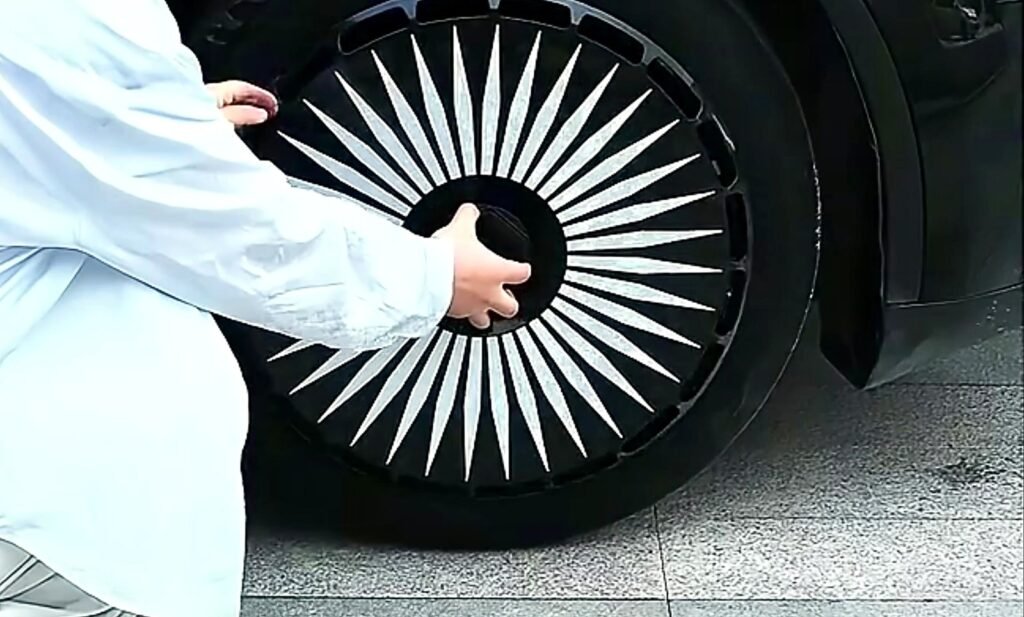
This guide covers fitment, cold-weather installation, and the salt-and-grit problems that show up between December and March. No theory, just what to check before the first freeze.
Why Winter Changes the Wheel Cover Question
Summer driving is forgiving. Plastic is warm, clips are flexible, and a slightly loose cover usually stays put. Winter is the opposite. ABS gets brittle below about 40°F, road salt works its way into every gap, and potholes send sharp shocks through the wheel.
That combination is why covers that survived a whole summer suddenly crack at the tabs in January. It is not a quality problem by itself. It is a temperature and fit problem, and both are manageable.
There is also a practical detail: winter tires are usually mounted on a second set of wheels. So Tesla wheel covers with winter tires are not just dealing with cold, they are dealing with a wheel they may never have been fitted to before.
Do Tesla Wheel Covers Fit Winter Tires?
Wheel covers attach to the wheel, not the tire. That single fact answers most of the question. If the winter tire is mounted on a wheel with the same diameter, width, and cover-mounting geometry as your summer wheel, the cover fits exactly as it did before.
OEM wheels with winter tires
If you bought a second set of factory Tesla wheels for winter, your original aero covers will fit them. Same part number, same clips, same result. Just confirm the wheel diameter matches the cover, because an 18-inch cover will not seat on a 19-inch wheel no matter how hard you push.
Aftermarket winter wheels
This is where owners get caught. Aftermarket wheels often have a different spoke profile, a deeper lip, or a center bore that sits proud of the face. A cover designed for the factory wheel may clip on but sit unevenly, which means it will vibrate, rub, and eventually let go.
Measure the wheel diameter and check the cover’s stated fitment before the tire shop mounts anything. Our Tesla wheel cover size guide covers the 18, 19, and 20-inch cases in detail.
Three Checks Before You Swap
Ten minutes of prep saves a roadside recovery. Run through these before the wheels go on the car.
- Diameter and width. A cover built for a 19×8.5 wheel will not sit flat on a 19×9.5. Width matters as much as diameter once the tire shoulder changes.
- Clip condition. Cold makes old tabs snap. Inspect each clip indoors, at room temperature, and replace any cover with missing or whitened tabs before winter rather than after.
- Brake clearance. Performance models with larger calipers leave less room behind the spokes. Test-fit one cover by hand before you commit to the full set.
If your covers are already showing cracks or missing clips, replacing them now is cheaper than replacing a wheel later. Our turbine-style covers are a direct fit for the factory wheel and hold up well through freeze-thaw cycles.
Cold-Weather Installation: Warm Plastic, Gentle Hands
Most winter cover damage happens during installation, not driving. ABS at 25°F behaves like a different material: less flex, more snap. A few habits will keep the tabs intact.
- Bring the covers indoors for an hour before fitting. Room-temperature plastic seats with far less force.
- Press around the rim in stages rather than driving one section home at a time.
- Never pry with a screwdriver or metal trim tool in the cold. Use your palms, or a plastic trim tool if you need leverage.
- Work in daylight. A tab that is 90 percent seated looks identical to a seated one at dusk.
Once the cover is on, push the outer edge with your thumb. Any movement means a clip is not engaged, and that cover will not survive a winter of expansion joints.
What Salt, Sand, and Slush Do to the Finish
Road salt is abrasive when dry and corrosive when wet. It settles into the gap between cover and tire, then gets ground in every time the wheel turns. Over three months, a gloss black finish turns chalky and the spoke edges go grey.
Rinse the covers weekly with plain water, and skip the pressure washer at point-blank range, which drives grit past the clips. A pH-neutral car shampoo and a soft brush are enough. If you want extra protection before the season starts, a coat of wax or a spray sealant slows the build-up considerably.
For a deeper routine, see our guide to Tesla wheel covers in winter.
Leave Them On or Take Them Off?
Owners argue about this every November. Both choices are defensible, as long as you pick one deliberately.
Leave them on if you drive daily on treated roads. The cover keeps salt and grit off the wheel face, which protects the finish you actually care about. You trade a little cleaning effort for a lot of rim protection.
Take them off if the car sits for long stretches, or if you run a dedicated winter setup with steel wheels. Covers on a parked car just trap moisture against the wheel for months, which is the one scenario where leaving them on does real harm.
Either way, check the clips once a month. A loose cover is a projectile at 70 mph, and cold makes loosening more likely, not less.
Buying Covers for a Winter Setup
If you are buying a second set specifically for winter, prioritize retention over styling. A cover with six or more contact clips and a reinforced outer lip will outlast a thinner design with a prettier face.
Look for ABS rather than a soft blend, confirm the fitment covers your exact wheel size, and expect to pay somewhere between $150 and $300 for a full set. Anything dramatically cheaper usually saves money on clip count, which is the one place you cannot afford to cut corners in winter.
Browse the full range on our shop page and match by model year and wheel size before ordering.
FAQ
Can I use Tesla wheel covers with winter tires on aftermarket wheels?
Sometimes. The cover must match the wheel’s diameter, width, and mounting face, not just the car model. Test-fit one cover by hand before mounting the set, and check that it sits flush with no rocking at the outer edge.
Do wheel covers affect TPMS in winter?
No. Tire pressure sensors sit inside the wheel at the valve stem, and a plastic cover does not block or interfere with the signal. Cold weather lowers tire pressure on its own, so check pressures monthly rather than blaming the covers.
Will winter tires ruin my wheel covers?
Not directly. The risks are cold brittleness, salt abrasion, and pothole impacts, all of which are reduced by correct fitment and monthly clip checks. Covers that are properly seated and cleaned regularly last through multiple winters.
The Bottom Line
Tesla wheel covers and winter tires are compatible as long as the cover matches the wheel, not just the badge on the trunk. Confirm the size, warm the plastic before fitting, rinse the salt weekly, and check the clips once a month.
Do that and your covers come out of March looking like they went in. Skip it and you will be ordering a replacement in February, when everything is out of stock. Start with a set that fits properly from the Nauticrim shop.