
Every Tesla owner who runs wheel covers eventually asks the same question: why do Tesla wheel covers fall off — and is it preventable? The reassuring truth is that a cover detaching from your Model 3 or Model Y is almost never random. It traces back to worn retention clips, rushed installation, heat, or simply the wrong fitment. Below we break down the six real causes, show you how to keep every cover locked on, and explain exactly what to do if one has already gone missing.
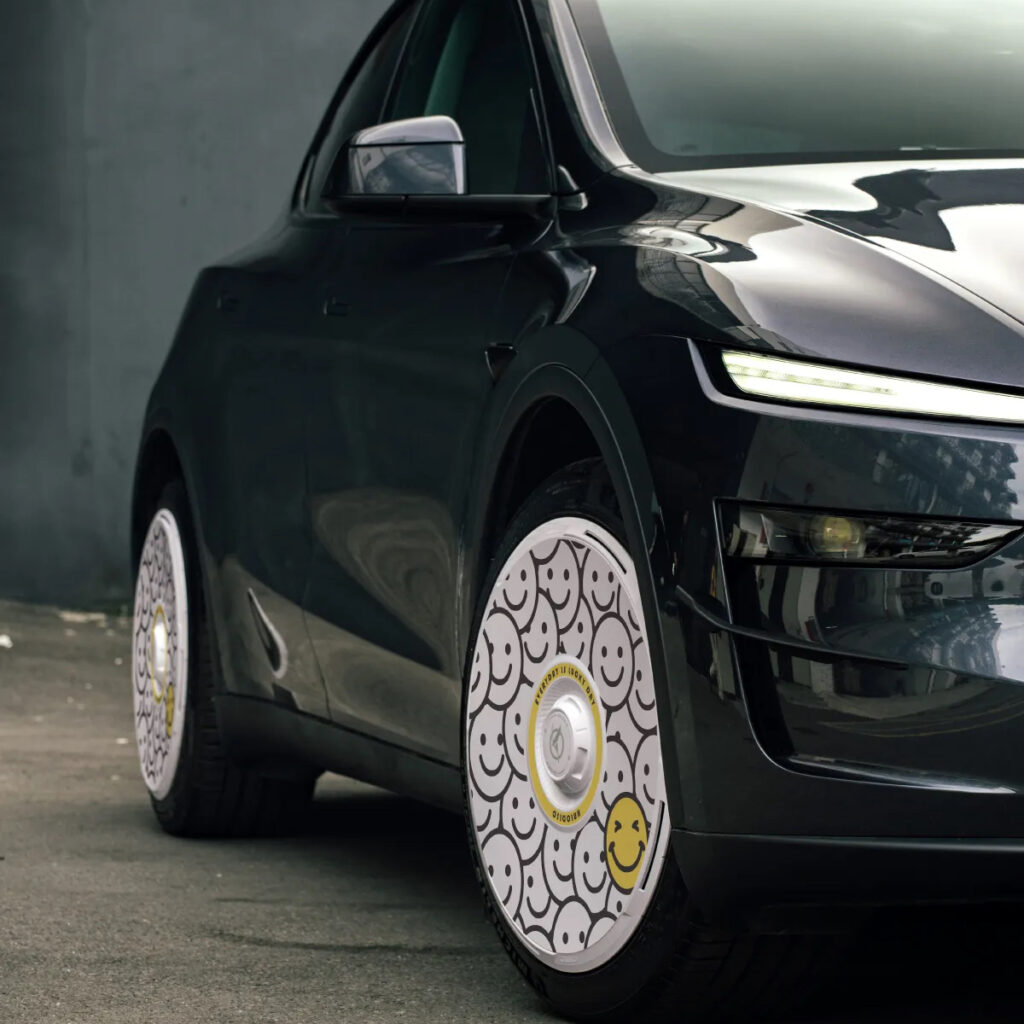
Why Do Tesla Wheel Covers Fall Off? The 6 Most Common Causes
Wheel covers stay attached through a simple system: a ring of flexible plastic clips that grip the wheel’s outer edge, plus a center locator that keeps everything aligned. When any part of that system degrades, highway wind does the rest. These are the six culprits we see most often:
- Worn or broken retention clips. Clip legs are engineered to flex a limited number of times. Repeated installation cycles, years of heat soaking, and cold-weather embrittlement gradually reduce their grip until vibration walks the cover loose.
- Improper installation. A cover seated at a slight angle may catch two or three clips but leave the rest hovering above the rim. It looks attached — until the first expansion joint launches it.
- Contamination on the mounting surface. Brake dust, road film, or a layer of wax acts like lubricant. Clips cannot bite a slick surface, so retention force drops even when every clip looks engaged.
- Heat and sustained vibration. Long highway runs in summer heat soften ABS plastic and flex the clip legs. Combined with constant high-frequency vibration, the cover slowly works itself outward millimeter by millimeter.
- Pothole and curb impacts. A sharp hit can momentarily deform the wheel rim, unseating clips faster than the plastic can spring back. Owners in pothole-heavy regions lose covers this way more than any other.
- Wrong fitment. Universal covers made for generic steel wheels rarely match the exact curvature of Tesla’s 18-, 19-, or 20-inch wheels. Partial clip contact means partial retention — and partial retention fails at speed.
How to Keep Tesla Wheel Covers From Falling Off
Preventing a repeat is straightforward, and it starts before the cover ever touches the wheel. Run through this checklist every time:
- Inspect every clip. Look for whitened stress marks, cracked legs, or a clip that no longer springs back. One bad clip compromises the whole cover.
- Clean the wheel’s edge. Wipe the mounting surface with isopropyl alcohol so clips grip bare material, not brake dust or wax.
- Align before you press. Line up the center bore and any locator tabs first — never snap a cover in at an angle.
- Press until it clicks. Work around the rim with your palms; you should hear or feel each clip engage.
- Tug-test every cover. Pull firmly at several points around the edge. A properly installed cover should not shift or lift.
- Recheck after 50–100 miles. New covers and freshly reinstalled ones deserve one verification pass before you trust them fully.
- Retire compromised covers. If clips are cracked or the edge is warped, replacement is cheaper than losing a cover on the freeway.
Our step-by-step Tesla wheel cover installation guide walks through each of these moves in detail, if you want a visual reference before your next install.
What to Do If a Wheel Cover Falls Off Mid-Drive
First, don’t brake hard — a departing cover is not an emergency. Check your mirrors, move to the shoulder when safe, and only retrieve the cover if it is out of traffic lanes. Once stopped, inspect the exposed wheel: look for clip fragments stuck in the rim, scratches, and any damage to the tire or TPMS sensor. If the wheel is clean and undamaged, you can keep driving without the cover indefinitely; the rim is fully functional, just less protected and slightly less aerodynamic. Save the cover if it is intact — many can be refitted with a replacement clip kit.
Repair or Replace? When a Loose Cover Isn’t Worth Saving
A single incident doesn’t doom a cover, but plastic has a memory. Stress whitening around a clip base, a leg that cracks when flexed, or an edge that no longer sits flush are all signs the retention system is finished. If one clip broke, a repair kit can work. If two or more show damage, the next failure is usually just miles away, and replacing with a purpose-built cover becomes the smarter spend.
Frequently Asked Questions
Is it safe to drive if my Tesla wheel cover falls off?
Yes. Wheel covers are cosmetic and aerodynamic accessories, not structural parts. Your rim, tire, brakes, and TPMS all function normally without one. The risks are long-term only: unprotected rims collect curb rash faster, and added aerodynamic drag can shave a few miles of range.
Do aftermarket Tesla wheel covers fall off more easily than OEM?
Not if they are engineered for your specific wheel. Quality aftermarket covers designed for the exact wheel — say, an 18-inch Model 3 Aero or a 19-inch Gemini — use reinforced clip geometry and hold as securely as factory covers. The covers that reliably fly off are cheap universal ones with soft, generic clips. Fitment specificity matters far more than the logo on the box.
The Bottom Line
So, why do Tesla wheel covers fall off? Almost always: tired clips, a rushed install, or generic fitment. Address those three and the problem disappears. If your current set has already lost its grip, upgrade to covers built specifically for Tesla wheels with retention systems designed for highway speeds. Browse the full Nauticrim wheel cover collection — the Power Turbine wheel cover for Tesla is a favorite among Model 3 and Model Y owners — and keep every cover exactly where you installed it.